You know, I’ve been working with ceramic metallization for years – helping engineers seal sensitive chips inside tough little packages. And one component that always makes me smile? Optocouplers. They’re those tiny devices that transfer signals using light, keeping high‑voltage and low‑voltage sides apart. Sounds simple, right? But the real world isn’t gentle.
Moisture creeps in. Temperature swings hit hard. Chemicals and humidity sneak through cheap plastic. And when an optocoupler fails… well, the whole system can go down. That’s exactly why I keep telling people: if you want your optocouplers to survive for years – not months – you need a Hermetic Ceramic Dual In‑line (DIP) Housing.
Let me break it down like I’m talking to a colleague over coffee. A hermetic ceramic DIP package isn’t just a box with pins. It’s a fortress. The ceramic body itself gives you natural electrical isolation – no leakage paths. The metallized layers (that’s my specialty) create strong, solderable pads that won’t peel or corrode. And the sealing? Flat sealing or gold‑tin solder – both create a true airtight barrier. No water vapor, no oxygen. Your optocoupler breathes nothing but clean, dry nitrogen inside.
In our tests, we placed standard plastic‑packaged optocouplers and ceramic DIP‑packaged ones side by side inside a humidity chamber at 85°C / 85% RH for 500 hours. The plastic ones showed degraded current transfer ratio (CTR) within 200 hours. The ceramic DIP ones? Almost like new. That’s the difference a real hermetic seal makes.
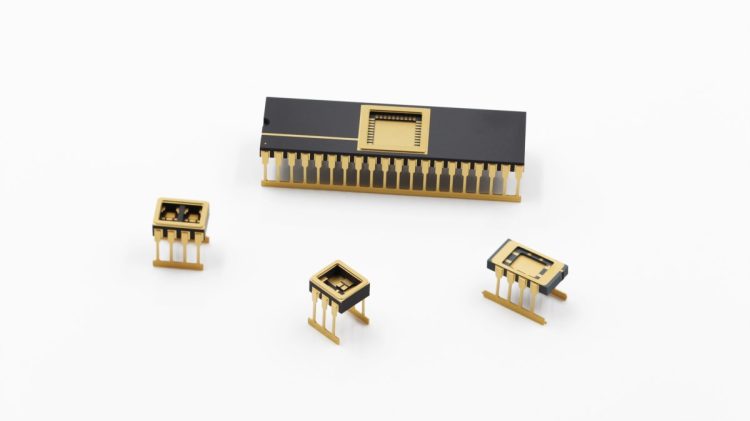
Now, why a Dual In‑line shape? Because it’s practical. You get standard lead pitches (2.54 mm, 1.27 mm, even 0.8 mm for high‑pin‑count designs). You can easily solder them onto PCBs by hand or machine. And the cavity inside can be tailored – small for a single optocoupler die, larger for a multi‑channel isolator. Look at this table from real product specs – I’ve picked a few typical versions:
| Product Model | Number of Leads | Lead Pitch (mm) | Cavity Size (mm) | External Dimensions (mm) | Sealing Type |
|---|---|---|---|---|---|
| DIP04D | 4 | 2.54 | 5.40×3.20 | 7.40×5.20 | Flat Sealing |
| DIP08 | 8 | 1.27 | 5.60×4.20 | 13.20×7.40 | Flat sealing/Gold‑Tin |
| DIP16 | 16 | 2.54 | 5.60×4.32 | 20.33×7.37 | Flat Sealing |
| DIP32 | 32 | 2.54 | 10.00×6.20 | 40.64×9.91 | Gold‑Tin |
You see those cavity sizes? Plenty of room for a phototransistor and an LED inside the same package – that’s your basic optocoupler. And because the ceramic body acts like a heat sink (some models even add a dedicated heat‑sink area), you don’t worry about thermal runaway. That’s a big deal when your optocoupler handles a few hundred milliamps.
Based on my experience, the most common mistake I see is using plastic DIPs for optocouplers in industrial motor drives or medical patient‑connected devices. Plastic works for a toy. But for a pacemaker? A factory robot? A satellite? No way. You need hermetic ceramic. It survives soldering reflow without absorbing moisture (no “popcorning”). It resists outgassing in vacuum. And it won’t turn yellow or crack after ten years of heat cycles.
So when should you pick a Hermetic Ceramic Dual In‑line (DIP) Housing for your optocoupler?
If your product goes outside a clean lab.
If reliability matters more than saving two cents.
If you ever see the words “aviation”, “implantable”, “downhole drilling”, or “railway signalling”.
That’s the honest truth. And the good news? These packages come in many lead counts – 4, 8, 16, 20, 32, 40 – so you don’t have to redesign your board. Just drop in a better house for your optocoupler.