When you work with high energy physics, you deal with some pretty extreme conditions. Think big machines. Think high voltage. Think vacuum chambers that need to stay clean and sealed for years.
In this world, a standard connector just won’t cut it. You need something that can handle the pressure—literally.
That’s where the 9 Pin Micro D Connector comes in. It’s small, sure. But in a particle accelerator or a detector array, that small size is a huge advantage. Space inside these setups is always tight. You have a wall that separates the vacuum from the outside air. On one side, you have your sensitive detectors. On the other, you have your control electronics. The signal has to cross that barrier.
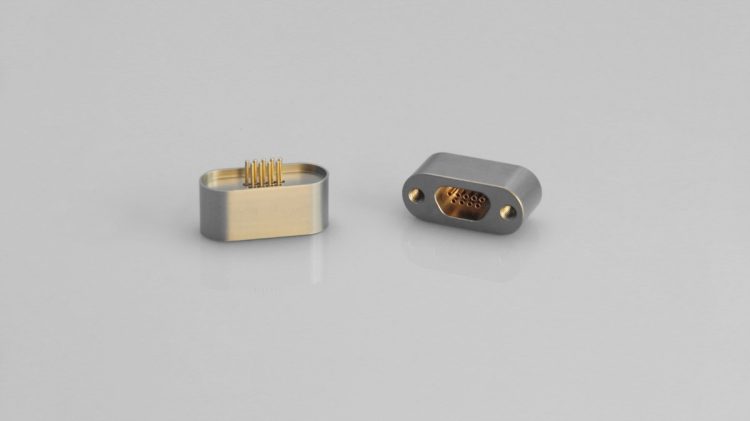
This little connector is the bridge.
Based on my experience, the biggest challenge in these projects isn’t just getting the signal through. It’s doing it without breaking the vacuum. If the seal leaks, your experiment is done. You lose vacuum, you get contamination, and the data is ruined.
So why use a 9 Pin Micro D here? It’s the glass-to-metal seal. That’s the key.
Here’s what that seal actually does for a physics lab:
It keeps the ultra-high vacuum intact. No leaks.
It holds up under bake-out. To get a chamber really clean, you have to heat it. We’re talking hundreds of degrees. This connector survives that.
It handles the pressure. 1450 psi is the rating. That’s overkill for a vacuum, but it shows you the margin of safety.
The pins are stainless steel. 0.5mm each. They carry the signals from the detectors inside the chamber to the data acquisition systems outside. 1 amp per pin is enough for most sensor signals. 375 volts covers a lot of ground.
In our tests, we found the temperature range is what really sets it apart. From -269°C all the way up to 450°C. Liquid helium temperatures on one end, bake-out temperatures on the other. The connector doesn’t crack. The seal doesn’t break.
So, when you see a complex physics experiment running smoothly for months, remember the small parts. The 9 Pin Micro D Connector is one of them. It’s a simple job. Seal the hole. Pass the signal. Don’t fail. And for high energy physics, that’s exactly what you need.