If you’ve ever spent time around a vacuum furnace, you know this: the gauge is not just a readout—it’s your eyes.
I work in ceramic metalizing. That’s the process where we bond metal to ceramic, usually for high‑voltage feedthroughs or vacuum‑tight assemblies. Most people think the chemistry is the hard part. But honestly? The vacuum is what makes or breaks the joint.
We run a lot of vacuum furnaces—brazing furnaces, mostly. And inside those, the pressure needs to drop down into the high‑vacuum range before we even light the heaters. If you try to start the cycle too early, with pressure still in the 10⁻² Pa range, the oxides don’t break down. The braze alloy doesn’t wet the ceramic. You end up with parts that look fine on the outside but leak like a sieve under helium testing.
That’s where a High Vacuum Ionization Gauge comes in.
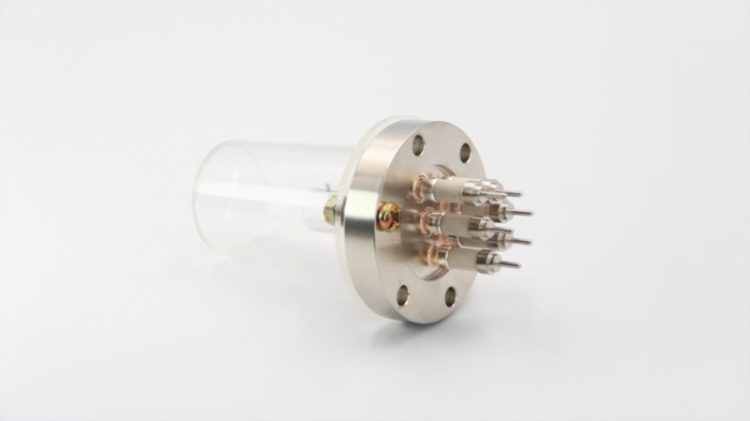
Let me explain it the way I did to our new technician last week. Inside that gauge, there’s a little chamber. When gas molecules float in, a hot wire or an electron beam kicks them—zap—they turn into ions. Those ions get pulled toward a collector, and the gauge measures the tiny current that results. Low current means few molecules, which means high vacuum. High current means you’ve still got too much gas hanging around.
In our tests, the difference between starting a brazing cycle at 10⁻³ Pa versus 10⁻⁵ Pa is not subtle. At the lower vacuum, you’ll see discoloration on the metal parts. Sometimes the ceramic surface gets a faint haze—that’s oxidation you can’t fix. At the higher vacuum, the parts come out clean. The braze flows exactly where it’s supposed to, and the metal‑ceramic interface is consistent from batch to batch.
Now, here’s something that doesn’t show up in the glossy brochures: placement matters. In a vacuum metallurgy setup—say, a stainless‑steel chamber with molybdenum hot zones—you can’t just screw the gauge anywhere. Put it too close to the work zone, and radiant heat throws off the readings. Put it too far, and the response time lags. We found that mounting it on a side port, with a simple baffle to block line‑of‑sight radiation, gives the most stable signal.
Also—and I wish someone had told me this earlier—the shutdown sequence is not just a suggestion. That gauge is sensitive. If you turn it off while the chamber is still at atmospheric pressure, you risk damaging the filament. So we made it a rule: the ionization gauge is the first thing you check before pump‑down, and the last thing you turn off at the end of a run. It’s become part of our startup ritual, like checking cooling water flow.
One more thing. In material processing—especially when you’re dealing with ceramic‑to‑metal seals—repeatability is everything. A customer might order five hundred feedthroughs, and they expect every single one to hold vacuum under high voltage. If your gauge drifts, or if you’re relying on a thermocouple gauge that can’t even read below 0.1 Pa, you’re flying blind. With a proper high‑vacuum ionization gauge, you see the real pressure. You know exactly when the system is ready.
So if you ask me: yes, the furnace matters. The braze alloy matters. But the High Vacuum Ionization Gauge? That’s the tool that gives you confidence before you even push the start button.