Think of a vacuum coating chamber like a sealed kitchen, and the Power Feedthrough for Coating System as the oven’s power cable — simple idea, but everything depends on it. You need power inside a tight, clean space. You cannot let air in. You cannot let contamination out. That’s the job.
The short story: a feedthrough brings electrical power through a vacuum wall, safely and without leaks. It may carry low voltage signals, or it may carry hundreds of amps for a sputter target or an evaporation source. In coating lines, reliability matters more than anything. Downtime costs money. Poor seals ruin films. Clear? Good.
Why it matters in vacuum coating and thin-film deposition
Vacuum coating processes — sputtering, evaporation, PVD, CVD — all need controlled power delivery. The feedthrough must:
keep the vacuum sealed;
tolerate the current or voltage demanded;
resist corrosion, outgassing, and thermal cycles.
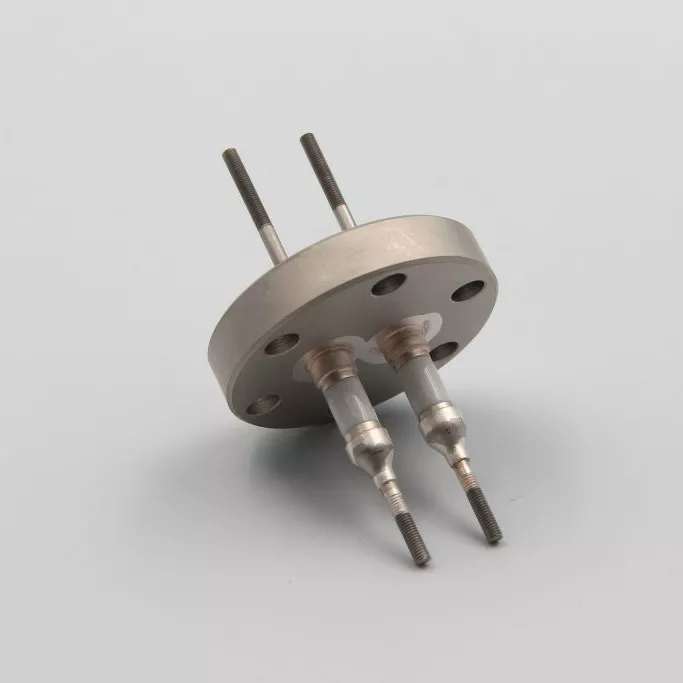
If the feedthrough fails, the coating quality drops. Films get contaminated. Yields fall. So choosing the right Power Feedthrough for Coating System is not optional. It’s essential.
Key technical points to watch
There are a few things you must check — no fluff.
Current and voltage rating.
Match the feedthrough to the actual operating current and any possible transients. Underrate it, and it heats up. Heat causes leaks, or worse — a short.
Vacuum level compatibility.
Some feedthroughs are for rough vacuum, others for high vacuum (HV) or ultra-high vacuum (UHV). Pick the right class. Don’t guess.
** insulation material & metallurgy.**
Ceramic-to-metal seals are common because ceramics keep vacuum tight and resist breakdown. But the exact ceramic and metal pairing matters for thermal stress and long-term stability.
Cooling needs.
High-power applications often need water cooling. If your process runs long pulses or steady high power — plan cooling into the Power Feedthrough for Coating System.
Connection style and mounting.
Ease of replacement, compatibility with chamber flanges, and cable routing — these small things save hours during maintenance.
Contamination & outgassing.
Materials and assembly matter. Clean materials, clean assembly procedures, and proper bakeout reduce contamination, which improves film quality.
Practical installation and maintenance tips
Keep it simple, follow steps, avoid surprises.
Torque bolts correctly. Over-torque cracks ceramics. Under-torque leaks.
Use proper gaskets and flange surfaces. No shortcuts.
If water cooling is used, test flow and pressure off-line first. Then test with low power.
Inspect seals at regular intervals. Replace at the first sign of creep or corrosion.
Log failures. Patterns tell you what to fix.
Common problems and how to handle them
Problems happen. Here’s how to think about them.
Heating at the feedthrough: check current rating, cooling, and contact resistance.
Slow vacuum rise after bake: suspect trapped moisture or outgassing materials near the feedthrough. Re-bake, better cleaning.
Intermittent power or arcing: inspect insulation surfaces, look for contamination, and verify cable terminations.
Final, plain advice
When you choose a Power Feedthrough for Coating System, pick one that fits the real-world mix: current, vacuum level, duty cycle, and maintenance ability. Don’t overcomplicate. Don’t under-spec. Reliability wins—every time.