metal products expert, I’ll walk you through why they matter, where they fit, and what to watch for when you pick one.
I work with ceramic-to-metal parts every day. I see isolators in labs, on test benches, in antenna farms. They’re small, often hidden. Yet they do big jobs. Their name says it all: Isolators. They separate. They protect. They keep one part from upsetting another.
Communication systems need clarity. Signals must travel cleanly — no stray currents, no unwanted return paths, no leaks that spoil performance. Isolators provide that clean break. They keep RF paths honest. They keep vacuum enclosures sealed. They stop high voltages from crossing where they shouldn’t. Simple idea. Important outcome.
Why isolators matter in comms — plain and simple
Signals are delicate. Noise is everywhere. Ground loops, reflections, and leakage currents all hurt performance. Isolators cut those problems down. They do it mechanically and electrically. A ceramic-to-metal isolator, for example, gives you a vacuum-tight seal plus solid electrical insulation. So, you can run a feedthrough or a coaxial joint through a chamber — and still keep things sealed and isolated. That matters in satellite uplinks, radar systems, and any high-power RF setup. It’s not glamorous. But it keeps systems reliable.
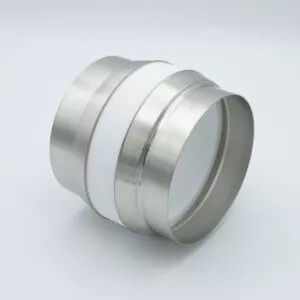
Where you’ll find them
Think: places where signal integrity and isolation meet harsh environments.
— Antenna feedthroughs, where cables must pass a bulkhead without leaking.
— RF transmitters, where high power meets sensitive matching networks.
— Satellite ground stations and microwave links, where temperature swings and weather demand rugged parts.
— Test and measurement rigs, where a bad leak or a hidden conductor can ruin repeatability.
Technical bits, without the fluff
Ceramic-to-metal joins are common in isolators because ceramics are good insulators and metals are good conductors — you need both. The trick is the seal. Solder, brazing, special metallization — those are the crafts that make sure a part stays sealed under vacuum and stress. Thermal expansion matters. Materials must play nice together when things heat up or cool down. Surface finish and coaxial alignment matter too, if you care about low VSWR and minimal insertion loss. In short: pick materials and processes that match your environment and your frequencies.
How to choose an isolator — practical points
First, match the basic specs: voltage rating, frequency range, insertion loss, VSWR, and vacuum level. Then check the build details: is the isolator ceramic-to-metal sealed? Is it rated for thermal cycling? Can it handle mechanical vibration? Ask for drawings. Ask for test data. And don’t forget the simple things: mounting options, connector types, lead lengths. Small practical mismatches cause big headaches later.
Installation and upkeep — keep it simple
Mount straight. Torque bolts evenly. Avoid bending leads. If it’s in a vacuum system — bake it per spec before commissioning. Inspect seals after thermal cycles. Watch for corrosion in coastal or salty environments. Replace if you see cracking or discoloration around the ceramic. Prevention is cheap. Repairs are not.
A quick note on RF vs. power isolation
Not all isolators are the same. Some isolate DC and high voltage. Others are RF isolators — nonreciprocal devices that protect transmitters from reflected power. Don’t use one in place of the other. Know what you need. Be precise with language when you order.
Final thought
Isolators are the unsung guardians of communication hardware. They don’t make the signal — they protect it. Pick well. Install carefully. Maintain quietly. Do that, and your system will thank you with uptime, repeatable tests, and less head-scratching down the road.