When we talk about RF systems, we are not just talking about signals. We are talking about power. High voltage. Fast switching. And very little room for mistakes.
This is where High-Voltage Vacuum Relays come in.
In high-frequency communication systems—radar, antenna tuning units, RF matching networks, broadcast transmitters—the switching device cannot be weak. It has to handle high voltage without arcing. It has to switch cleanly. And it has to repeat that action thousands, sometimes millions, of times. No drama. No instability.
A vacuum relay works differently from a typical air-insulated relay. Inside, there is no oxygen. No contamination. Just vacuum. That simple detail changes everything. Because in vacuum, the arc is minimized, contact wear is lower, and dielectric strength is much higher. The result? Stable high-voltage switching, even in compact designs.
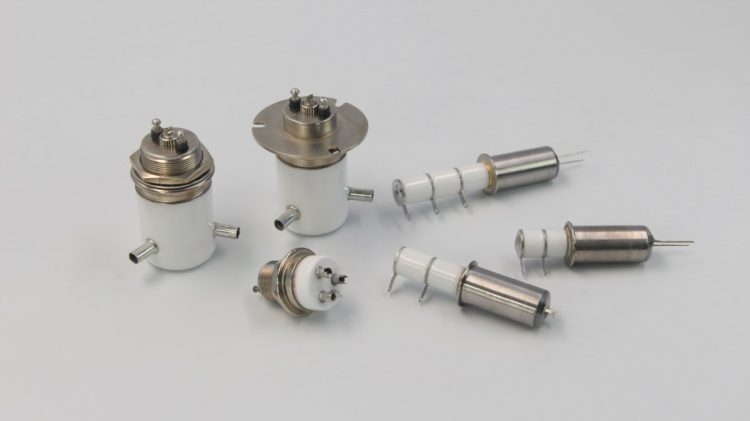
Why RF Systems Need High-Voltage Vacuum Relays
RF systems operate at high frequency, but often with surprisingly high voltage peaks. Especially in:
– Antenna switching systems
– TWT power supplies
– Impedance matching networks
– Pulse modulators
– Radar transmitters
The voltage spikes can be sudden. The switching must be precise. If the relay cannot handle it, the system suffers—signal distortion, power loss, or worse, component failure.
High-Voltage Vacuum Relays solve this problem by offering:
– High dielectric strength
– Low contact resistance
– Fast recovery after switching
– Minimal RF leakage
And in RF design, small improvements matter. A little less loss. A little more stability. That adds up.
Performance Under High-Frequency Conditions
RF environments are not gentle. There is heat. There is electromagnetic interference. There are rapid voltage transitions.
A standard relay may degrade quickly under these conditions. Contacts oxidize. Insulation weakens. Switching becomes inconsistent.
But vacuum relays? They stay stable. Because the vacuum prevents oxidation. Because the internal structure supports high-voltage isolation. Because the contact gap can withstand high transient voltage without breakdown.
In other words, they are built for stress. Compact Design, High Reliability.
Modern RF systems are getting smaller. Lighter. More integrated. Yet power levels are not decreasing. In fact, many are increasing. This creates a design challenge: how to switch high voltage in limited space.
High-Voltage Vacuum Relays offer a compact solution. Their high dielectric strength allows shorter spacing compared to air insulation. That means smaller footprint without sacrificing performance. For RF equipment manufacturers, this is a practical advantage. Not theoretical. Practical. Long-Term Stability in Critical Applications
In communication infrastructure, downtime is expensive. In radar systems, instability is unacceptable. In broadcast transmission, signal interruption is visible immediately. That is why reliability is not optional.
High-Voltage Vacuum Relays provide long mechanical and electrical life. The sealed vacuum environment protects the contacts over time. Less oxidation. Less erosion. More consistent switching cycles. And consistency is what RF engineers want most.
Final Thoughts
In RF and high-frequency communication systems, switching is not just about turning something on or off. It is about controlling energy. High voltage energy.
High-Voltage Vacuum Relays give engineers a dependable way to manage that energy safely, efficiently, and repeatedly.
They are not flashy components. They sit quietly inside the system. But without them, the system cannot perform at its best.