Let’s talk about high‑speed transceivers. You see them everywhere in data centers, 5G base stations, and fiber‑to‑the‑home equipment. These small devices send and receive light signals at crazy speeds – 10G, 100G, even 400G. But inside, they rely on two critical parts: a ROSA (receiver) and a TOSA (transmitter). And those parts need serious protection.
That protection comes from Hermetic Ceramic Packages for ROSA/TOSA Modules.
Think about what happens inside a transceiver. You have a laser diode or a photodiode, plus tiny amplifiers and control chips. Any moisture, dust, or oxygen that gets in can ruin the optics or corrode the electrical connections. A plastic housing won’t cut it. Neither will a simple metal lid with a gasket. You need something truly airtight – hermetic.
That’s where ceramic shines. Ceramic doesn’t absorb moisture. It doesn’t outgas. And when you metalize its surface (add tungsten or molybdenum‑manganese layers), you can braze metal rings or feedthrough pins onto it. The result is a sealed box that keeps the inside clean for 20+ years.
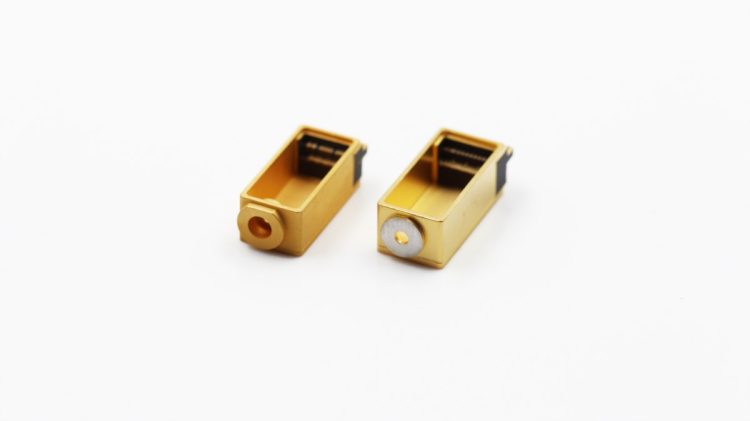
Based on my experience, the tricky part isn’t just sealing the package – it’s handling the high frequencies. A transceiver running at 100 GHz needs signal paths that don’t cause reflections or losses. If your feedthrough design is sloppy, the eye diagram closes and your link fails. Good ceramic packages are designed with controlled impedance lines, short bond wires, and smooth transitions from the ceramic to the external PCB.
Here’s a quick summary of why these packages work for high‑speed transceivers. The table below comes directly from InSealing’s product page, and it captures the essentials:
| Advantage | Description |
|---|---|
| Exceptional Hermetic Sealing | InSealing’s premium ceramic construction creates an airtight barrier, effectively shielding delicate optoelectronic components from moisture, pollutants, and environmental degradation. |
| High-Frequency Capabilities | Optimized for ultra-fast signal routing, these enclosures easily meet the stringent performance demands of 10 GHz to 400 GHz optical communication networks. |
| Thermal & Mechanical Toughness | Manufactured with elite ceramic materials that feature low thermal expansion and robust heat resistance, ensuring operational stability over a prolonged lifespan. |
| Bespoke Customization | We provide flexible adjustments for dimensions, metallization layouts, pin configurations, and structural shapes to perfectly align with your specific module designs. |
| Assembly Process Compatibility | Flawlessly integrates with industry‑standard manufacturing processes, including wire bonding, chip attachment, optical alignment, and laser welding. |
One thing you’ll notice is the high‑frequency capability row. That’s not just marketing talk. When you push data rates above 10 GHz, the package becomes part of the transmission line. A bad package will kill your signal. A good one – with the right metallization pattern and ground‑signal‑ground layout – lets the signal pass almost like it’s not even there.
Now, what about real‑world transceiver production?
Transceiver manufacturers assemble ROSA and TOSA using automatic die bonders, wire bonders, and optical alignment machines. The ceramic package has to fit those processes. Its lid must be weldable (usually with a kovar ring). Its pads must be gold‑plated for wire bonding. Its cavity must be deep enough for the lens or isolator. And the whole thing must survive reflow soldering when the transceiver is mounted on a board.
That’s a lot of requirements. But a well‑designed hermetic ceramic package meets them all.
So if you’re designing or sourcing components for high‑speed transceivers, don’t overlook the package. It’s not just a box. It’s an electrical, thermal, and environmental partner to your ROSA and TOSA chips. Get it right, and your transceiver will ship millions of units without field failures. Get it wrong, and you’ll chase intermittent link errors for years. Your choice.