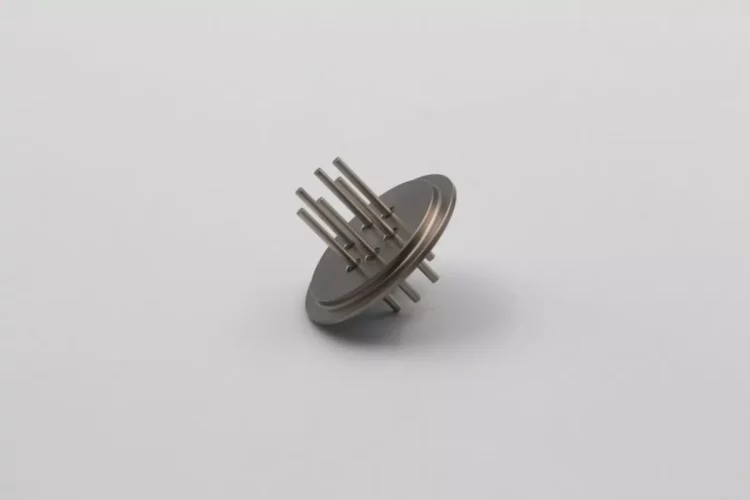
Glass-to-Metal Sealing — say those words early and often — is about making an electrical pass-through that stays airtight and stable, even when things get hot, cold, wet, or shaken. In cars you’ll find that need everywhere. Under the hood. Inside safety systems. In electric vehicles, too.
Why Glass-to-Metal Sealing matters for cars
Cars are not gentle places. Heat spikes. Oil and salt. Vibration that never stops. Electronics need to keep working in that mess. Glass-to-Metal Sealing gives you:
a hermetic barrier — no moisture, no gas creep.
electrical insulation that won’t break down with time.
mechanical grip between glass, ceramic and metal — so pins don’t wiggle loose.
resistance to temperature swings — from a cold morning to a catalytic-converter-hot afternoon.
Short sentence. Big impact.
Typical automotive uses
Glass-to-Metal Sealing shows up in parts you might not notice, but would miss if they failed.
Engine sensors — temperature probes, pressure sensors, knock sensors. They sit close to heat and oil; they must stay sealed.
Exhaust and emission sensors — oxygen sensors and lambda housings need electrical feedthroughs that last.
Airbag igniters and safety systems — hermeticity and reliability are non-negotiable.
ABS / wheel speed sensors — constant vibration; low failure tolerance.
Transmission sensors and actuators — oil, heat, movement.
EV and high-voltage systems — feedthroughs and connectors that separate battery packs from the outside world, while handling insulation and creepage concerns.
Control units in harsh locations — any ECU that moves into a dirty or wet spot benefits from hermetic feedthroughs.
How it actually works — plain words
Think of a pin going through a wall. If the wall cracks around the pin, water gets in. With glass-to-metal, the pin is fixed inside a glass or ceramic collar, and that glass/glass-to-metal joint is fired so the pieces become one. Materials are chosen so they expand and contract together. That prevents cracks. End result: a sealed, durable electrical path.
Things to watch for when you design or choose parts
Longer note — but important.
CTE matching. Materials expand with heat. If the metal and glass expand differently, the seal fails. Match them. It’s simple physics.
Materials and coatings. Plating on pins, corrosion resistance, and the right metal (often alloys like Kovar) matter. They change how the part behaves over time.
Number of pins and density. More pins means more complexity — and more chance for micro-paths. Design accordingly.
Voltage and insulation needs. High-voltage EV use demands larger creepage and clearance distances. Don’t skimp here.
Mechanical mounting and strain relief. The seal can be perfect, but a bad mount will transfer stress and ruin it.
Testing. Leak-testing, thermal cycling, and vibration testing are not optional. They prove the design. Trust test data, not promises.
Short reminder: test early. Test often.
Installation and maintenance — what technicians should know
Install these like you care about life — because sometimes you do.
Avoid bending pins after sealing. They’re strong, but not infinite.
Use correct torques on mating connectors. Over-torque stresses the seal. Under-torque lets contaminants in.
Replace damaged feedthroughs. A small crack is a deadline.
For EV battery systems, follow insulation monitoring rules — a hermetic seal helps, but it’s not the whole safety story.
Picking a supplier — plain tips
You want a supplier who understands materials and processes. Look for:
proven track record in automotive or similar harsh markets.
willingness to share test data: thermal cycles, vibration, leak rates.
ability to customize: different pin counts, plating, and mounting styles.
quality systems and traceability.
Buy expertise. Not just a catalog number.
Final word — why choose Glass-to-Metal Sealing in cars
It’s simple: longevity and trust. When a component must keep out water, gases, and dirt — and when it must carry a reliable signal under heat and shake — glass-to-metal sealing is one of the few options that still works years later. It costs more than a simple plastic feedthrough. It pays back in fewer failures. Less warranty trouble. Safer cars.