As a ceramics metallization expert, I like to keep things plain. So — here’s the short of it: Multiple Connectors matter in aerospace because they solve a hard set of problems at once, and ceramics help them do it reliably. Let me walk you through why, how, and what to watch for.
First — why ceramics?
Ceramics are quiet heroes. They’re strong, they resist heat, and they’re excellent electrical insulators. Put a tiny metal pad on a ceramic, and you get a place to attach a conductor that still behaves well under heat and stress. That combination — ceramic body with metallized terminations — is what makes many aerospace Multiple Connectors work where other materials fail.
What aerospace asks for — plain list:
high temperature tolerance;
electrical insulation with high voltage safety;
hermetic sealing for pressurized or vacuum parts;
resistance to vibration and mechanical shock;
long-term reliability with little maintenance.
Multiple Connectors are the package that brings many electrical paths through a single, compact interface. In an aircraft or satellite, space is tight and weight matters. So, instead of dozens of loose wires and lots of connectors, engineers use a single Multiple Connector that carries many signals—power, telemetry, control lines—neatly and reliably.
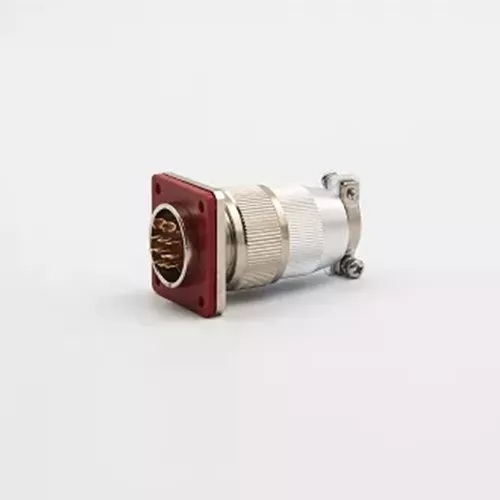
How metallized ceramics help Multiple Connectors meet aerospace needs
Think of a Multiple Connector as three parts: the insulator body, the conductive paths, and the outer housing or flange. Metallized ceramics give you a tough, inert insulator that also accepts a metal film where wires or pins must join. That metal film is not just paint — it’s bonded to survive thermal cycles and mechanical stress. You can braze to it. You can solder to it. You can make a leak-tight seal to metal housings. That last bit — hermeticity — is crucial for avionics and space hardware. A tiny leak can ruin a system. Ceramic-to-metal joins, done right, keep the air where it belongs.
Signal integrity and high voltage — two different beasts
Aerospace systems carry delicate sensor lines and fat power feeds. Multiple Connectors must keep those apart, electrically. Ceramic insulators allow close packing of many conductors without crosstalk, and they tolerate higher voltages between pins than many plastics. So, you get density without compromise. At the same time, the metallization must be smooth and well adhered. Rough, cracked, or poorly bonded metal layers create hot spots, which is bad — especially in space, where you can’t fix things easily.
Thermal expansion — the quiet failure mode
Metals grow and shrink with heat. Ceramics do too, but differently. The trick is to match materials or design the joint so the stresses don’t crack the seal. Good metallization firms choose metal systems and brazing fillers that accommodate these differences. In practice, that means fewer failures from repeated heating and cooling cycles, which aircraft and rockets see a lot of.
Vibration and shock — testing wins the day
Planes vibrate; rockets shake like mad. Multiple Connectors in aerospace are tested for mechanical fatigue. The metallized layer must survive constant flexing where the pin meets the ceramic. That’s another place where experience in ceramic metallization pays off: selecting the right metal stack and processing route keeps the joint robust.
Practical tips for engineers (short, clear):
specify hermeticity when you need it — don’t assume.
ask about thermal cycle specs; they differ a lot.
check vibration and shock test reports.
prefer proven metallization systems for brazing to metal housings.
mind the surface finish — electrical and mechanical performance depend on it.
A word on customization
One size rarely fits all. Aerospace projects often require bespoke Multiple Connectors — different pin counts, special pin layouts, mixed signal and power pins, unique flanges. With metallized ceramics, customization is straightforward: you can print or mask and deposit metallization where needed, then process it for brazing or soldering. That flexibility keeps Multiple Connectors useful across diverse aerospace roles — from cockpit electronics to propulsion control to satellite payload interfaces.
To finish — the bottom line
Multiple Connectors, when built with metallized ceramics, give aerospace systems compactness, electrical safety, and long-term reliability. They manage heat, they survive vibration, and they seal tightly. If you care about making a system that lasts — and works — start with the connector choices. Get the ceramics, the metallization, and the joining method right. Do that, and the rest follows.