When we talk about electronic device packaging, most people think of molding compounds, lead frames, or epoxy underfills. But there is a smaller, quieter component that often decides whether your whole package survives or fails in the field. That component is the Custom Viewport.
I have spent years working with ceramic-to-metal sealing, and one thing keeps coming back – the viewport is never just a piece of glass. In electronic packaging, especially for hermetic microelectronics, RF modules, or photonic integrated circuits, you need a window that does two things at once. It keeps the inside environment completely isolated from the outside – moisture, oxygen, and particulates have to stay out. At the same time, it lets light, laser beams, or even just visual inspection pass through without distortion. That is a tough balance.
Take a typical ceramic quad flat package (CQFP) that houses a high-speed optical transceiver. The package goes through wire bonding, seam welding, and then a final leak test. If you put a standard borosilicate window on that lid, you will see micro-cracks after just three thermal cycles from -55°C to 125°C. Why? Because the coefficient of thermal expansion (CTE) mismatch between the glass and the ceramic body creates stress concentration right at the sealing interface. A Custom Viewport solves that by matching CTEs. You choose the glass type – fused silica, sapphire, or even ZnS – and then you design the ceramic flange with the exact same expansion behavior.
Based on my experience, the real challenge is not the glass itself; it is the brazing alloy between the ceramic ring and the metal housing. In our tests, we used a 72% Ag-28% Cu eutectic braze at 780°C, and the Custom Viewport held a helium leak rate below 1×10⁻⁹ atm·cc/sec – that is military-grade hermeticity. But here is the catch: if the braze thickness varies by more than 50 microns, you get voids. And voids become leakage paths after humidity aging. So you need tight process control, and you need the viewport supplier to share their actual braze profile data, not just a generic datasheet.
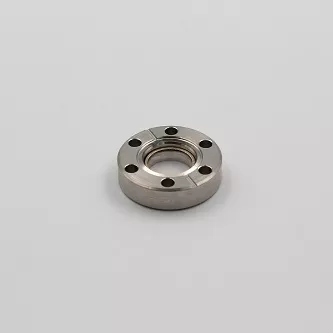
Now, why does this matter for packaging engineers? Because the package is no longer a black box. With a Custom Viewport, you can do in-situ optical alignment during active die attach. You can monitor solder reflow behavior inside the cavity without opening the lid. You can even use it for laser trimming of resistors after the package is sealed – that saves an entire post-assembly step. I found that customers who switch from solid ceramic lids to viewport-equipped lids cut their final test time by roughly 30%, because they catch misalignment early, right inside the bonding tool.
Let us look at some typical specifications that you would specify for a Custom Viewport used in this field. The table below gives you a practical reference based on common package sizes and process conditions.
| Parameter | Standard Range | Custom Option (Typical) | Test Condition |
|---|---|---|---|
| Window Diameter | 10 – 50 mm | up to 120 mm | optical clear aperture ≥ 90% |
| Glass Material | Borosilicate | Fused Silica / Sapphire / ZnS | transmission > 92% @ 400–700 nm |
| Ceramic Flange Material | 95% Al₂O₃ | 99.6% Al₂O₃ or AlN | CTE match to glass (Δ < 0.5 ppm/°C) |
| Brazing Alloy | Ag-Cu eutectic | Ag-Cu-Ti (active braze) | brazing temp: 750 – 820°C |
| Hermeticity (He leak) | < 1×10⁻⁸ atm·cc/sec | < 1×10⁻¹⁰ atm·cc/sec | per MIL-STD-883 |
| Operating Temperature | -40°C to +85°C | -65°C to +200°C | 1000 cycles thermal shock |
| Surface Flatness (per 25 mm) | λ/4 @ 633 nm | λ/10 @ 633 nm | interferometer measurement |
Look at the thermal shock number – 1000 cycles. That is not a marketing boast. That comes from real qualification runs where the Custom Viewport goes into a hermetically sealed package with a pin count of over 200. The package gets soldered onto a PCB, then it goes into a temperature chamber for accelerated life testing. If the viewport fails, you lose the whole module – not just a window. So you treat the viewport design with the same rigor as your die attachment or wire bonding.
One more thing about manufacturing. The ceramic ring needs to be metalized first – usually with a molybdenum-manganese paste, fired at 1450°C in a wet hydrogen atmosphere – then nickel-plated, then brazed. That sequence is old-school, but it works. A Custom Viewport supplier who skips the nickel barrier will give you poor wetting, and you will see dewetting spots under the microscope. That is a red flag. Always ask for cross-section photos of the braze joint before you approve the drawing.
So where does this fit in the bigger picture? Electronic device packaging is moving toward higher frequency (millimeter-wave), higher power density, and tighter optical alignment. Off-the-shelf windows cannot adapt to those needs. You need a Custom Viewport that is engineered for your specific cavity depth, flange geometry, and optical path. And you need it with full traceability – lot numbers on the ceramic, glass batch records, braze furnace logs. That is the level of detail that separates a reliable package from a field-return disaster.
To sum it up – a Custom Viewport is not an accessory. It is a functional element that influences thermal management, optical performance, and long-term hermeticity. When you select one, do not start with the glass. Start with your process temperature profile and your assembly tooling constraints. Then work backward to the flange design and the braze alloy. Do that, and you will have a window that actually helps – not one that makes you wish you had kept a solid lid.