When people talk about vacuum coating, they often jump straight into things like thin-film quality, surface uniformity, or deposition rate. All important, yes. But behind the shiny results, there’s a quieter hero that keeps the whole system alive and stable day after day: custom ceramic-to-metal sealing.
And without it, many vacuum coating machines simply wouldn’t run the way they should. That’s the truth.
Why Vacuum Coating Needs More Than Just a Good Chamber
A vacuum coating system may look like a big metal box from the outside, but what goes on inside is very delicate. You have high temperatures, sudden pressure changes, strong plasma fields, reactive gases, high-voltage power feeds… quite a wild mix.
Now imagine all of these forces acting at the same time on the points where wires, tubes, sensors, and electrodes pass through the chamber wall. Those tiny interfaces are exactly where leaks want to happen first.
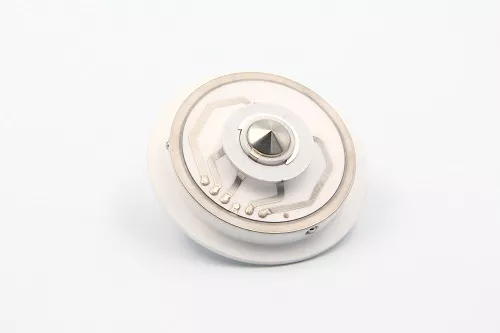
This is where Custom Ceramic-to-Metal Sealing earns its keep.
Quietly. Steadily. Reliably.
So… why ceramic + metal? Why not something simpler?
Ceramic has one job: stay strong where other materials start to lose their temper.
High heat? No problem.
High voltage? Still fine.
Corrosive gases? It barely reacts.
Metal, on the other hand, brings mechanical strength and an easy way to weld things into the chamber.
Put them together — with a proper metallization and brazing process — and you get a seal that stays airtight even under harsh vacuum cycles. That means no leaks, no contamination, no instability in your process. And in vacuum coating, stability is sometimes worth more than speed.
Where Custom Ceramic-to-Metal Sealing Makes a Real Difference
Let’s break it down into the moments when a vacuum coater truly “feels the pain” if the sealing isn’t right:
1. During high-temperature deposition
Processes like PVD, sputtering, and evaporation often push temperatures up.
A regular feedthrough might warp. Ceramic won’t.
2. When the chamber cycles from atmosphere to vacuum repeatedly
Different materials expand differently.
Ceramic-to-metal seals are engineered so the materials move “in sync,” avoiding cracks.
3. Under high-voltage or RF power
Many deposition sources need strong electrical supply inside the chamber.
Ceramic provides outstanding insulation and avoids arcing.
4. When reactive gases are involved
Some coatings use oxygen, nitrogen, or specialty chemical gases.
Ceramic resists chemical attack much better than most plastics or glasses.
In short — when your vacuum process gets tough, custom ceramic-to-metal sealing keeps the weak spots from breaking.
Why Customization Matters More Than You May Expect
Every vacuum coating system is a bit different. Some have tight chamber space. Some need many signal pins in one place. Others need gas channels or optical paths integrated into the seal.
That’s why custom is not a luxury — it’s a necessity.
A well-designed custom ceramic-to-metal seal fits the shape, the environment, the electrical load, and the pressure profile of the actual equipment. When the seal matches the machine, you get better uptime and smoother coating results. And that usually means lower operation costs in the long run.
The Bottom Line
Vacuum coating is all about control.
You’re creating layers that are thinner than a human hair, sometimes even thinner than a wavelength of light. And to reach that level of precision, the environment inside the chamber must stay clean, stable, and perfectly sealed.
Custom Ceramic-to-Metal Sealing is the foundation that makes this possible. It may not be the flashiest part of the system. But it’s one of the most important. Without it, nothing else works the way it should.