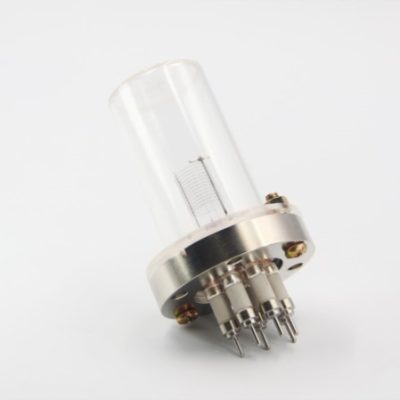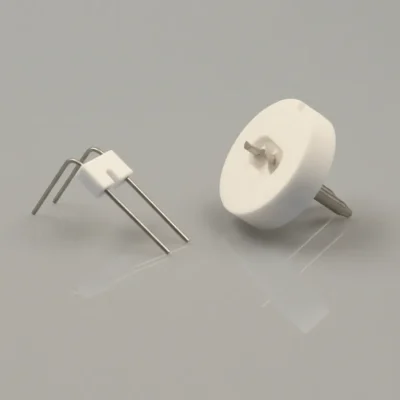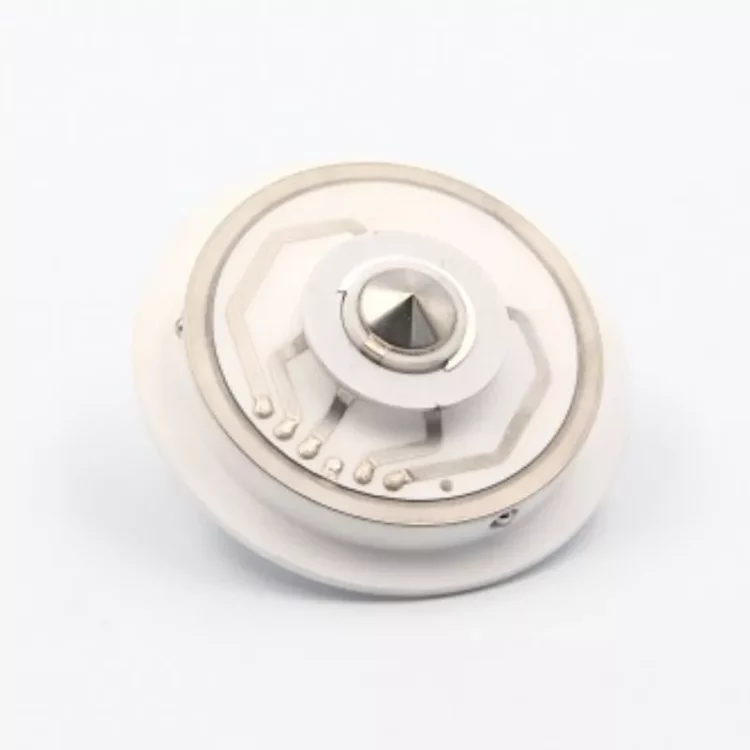
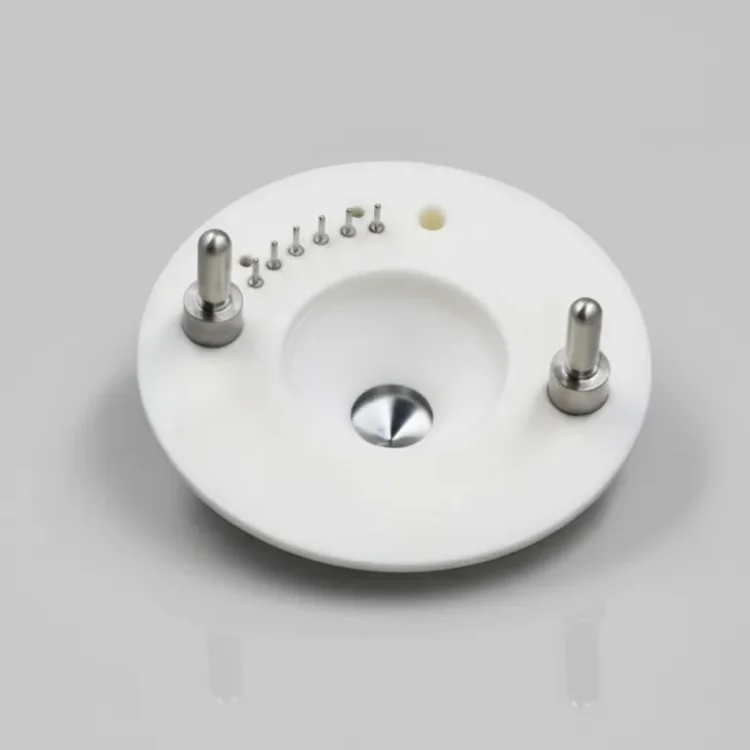
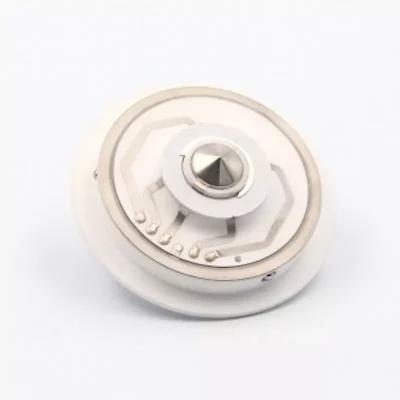
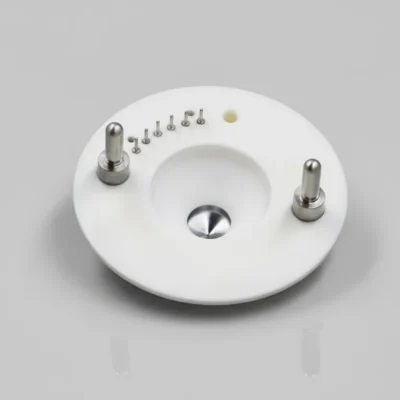
The mass spectrometer ceramic orifice plate serves as a vital bridge connecting the ion source to the mass analyzer. In advanced analytical systems, particularly triple quadrupole mass spectrometers, it acts as the crucial interface where the declustering potential (DP) is primarily applied.
By accurately regulating ion admission, electric field intensity, and pre-analysis collision conditions, this high-performance component from InSealing facilitates optimal desolvation, declustering, and initial ion filtering. Consequently, it plays a decisive role in dictating the overall sensitivity, signal-to-noise (S/N) ratio, and analytical reliability of the mass spectrometer.
The Role of the Ceramic Orifice Plate in Declustering Potential (DP)
InSealing’s mass spectrometer ceramic orifice plates function as electrically biased electrodes specifically designed to deliver the declustering potential. As ions transition through the aperture into the intermediate vacuum chamber, a precise voltage gradient is formed between the orifice plate and the subsequent ion-guiding components. This voltage drop rapidly accelerates the ions over a micro-distance, imparting the exact kinetic energy needed for highly efficient declustering right before mass analysis takes place.
Design and Structural Advantages
- Precision-engineered geometry: Ensures consistent and highly stable ion sampling.
- Vacuum optimization: Achieves a perfect balance between maximum ion transmission efficiency and vacuum system load control.
- Premium conductive materials: Guarantees stable and reliable voltage application across the component.
- Optional heating integration: Supports external heating configurations to accelerate solvent evaporation.
- Broad compatibility: Works seamlessly with ESI, APCI, and other related mass spectrometer ionization sources.
- Targeted application: Specifically tailored for high-performance LC-MS and triple quadrupole platforms.
Typical Applications
- Liquid chromatography-tandem mass spectrometry (LC-MS/MS) systems
- Quantitative evaluations in pharmaceutical research
- Food safety inspections and environmental monitoring
- In-depth analysis of highly complex biological matrices
- Ultra-sensitive, trace-level analytical detection methodologies
Impact on Mass Spectrometry Performance
| Performance Parameter | Enhancement via Orifice Plate & DP Configuration |
|---|---|
| Sensitivity | Significantly boosts the effective ion transmission rates |
| Signal-to-Noise Ratio (SNR) | Effectively diminishes chemical and solvent-induced background noise |
| Spectral Stability | Dramatically reduces signal variations and unwanted ion clustering effects |
| Quantitative Precision | Enhances both measurement linearity and overall reproducibility |
| In-Source Fragmentation | Easily and accurately controlled through precise DP adjustments |